On Mounjaro or Wegovy — and thinking: “I can’t stay on this forever”?
Deprescribing. With a plan for what happens next.
GLP-1 • DEPRESCRIBING • CLINICAL DATA REVIEW
Starting is easy. Coming off well is the part no one explains
Clinician-led review, interpretation, and medication strategy, built for long-term maintenance.
— On a GLP-1 and unsure what happens next
— On multiple medications and want one clear plan
— Doing everything “right”, but results aren’t moving
How it works →
Clinical appointments are provided by CQC-registered Sutton Medical Consulting
As Seen & Spoken At
CLINICAL PHILOSOPHY
“I provide clinician-led medication reviews and stepwise deprescribing plans where appropriate, especially for GLP-1s, SSRIs, PPIs, statins and blood pressure medication, paired with metabolic health support to reduce rebound and maintain results.”
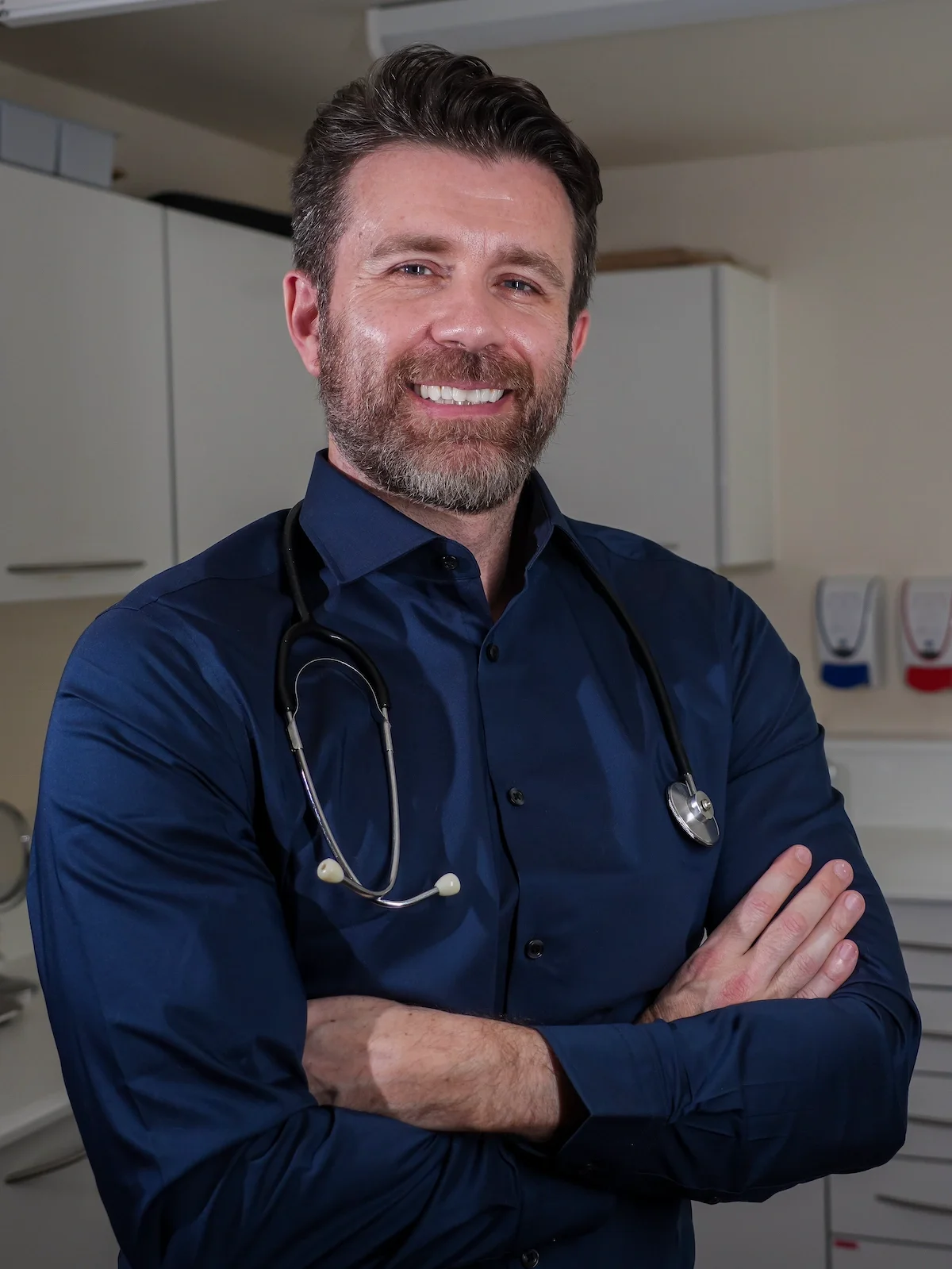
— Dr Dan Reardon NHS A&E doctor and deprescribing specialist
CORE SERVICES
01
Deprescribing
Medication review and stepwise deprescribing plans — GLP-1, PPIs, blood pressure, SSRIs, and statins. Built around your risk profile.
02
Metabolic Health & Optimisation
Strength-first body composition, metabolic markers, appetite and satiety systems, sleep and recovery — built for long-term maintenance.
03
Clinical Data Review
Expert interpretation of bloods, wearables, CGM, DNA and labs. "What it means" plus a clear plan for what to do next.
DEPRESCRIBING PATHWAYS
Choose your starting point.
Each pathway has a different rebound pattern and taper strategy.
FLAGSHIP
GLP-1 Exit Strategy
Wegovy / Ozempic / Mounjaro
Preparing to taper or stop GLP-1s? Clinician-led plan to keep results through appetite return, lean mass protection, and long-term maintenance.
SSRI / Antidepressant Review
e.g. Sertraline, Fluoxetine, Citalopram, etc
Careful taper planning with stability scaffolding across sleep, stress load, and relapse prevention.
PPI Review
Reflux medications
Rebound reflux planning, dietary trigger identification, step-down strategies and lifestyle levers.
Statin Review
Where appropriate
Risk stratification and shared decision-making to confirm whether ongoing therapy remains clinically indicated.
Blood Pressure Medication
Step-down with home monitoring
If readings are stable, we review whether medication is still needed and plan a safe, monitored step-down where appropriate.
Medication Load Review
Polypharmacy
On multiple medications? One coherent, clinician-led plan — mapping the full regimen, interactions, and priorities.
Deprescribing is the easy part.
Staying stable afterwards is the work. Here is how we do it.
Clinical Process
Review your history, goals, current medication list, and previous attempts. We map the likely rebound points and define what success looks like for you.
Before changing anything, we build a stable baseline: nutrition structure, strength plan, sleep anchors, and symptom tracking. This reduces noise.
A personalised plan: what to continue, what to adjust, what may be reduced where appropriate. Clear monitoring targets and check-in points.
Step-down is gradual and responsive, with symptom tracking and decision rules. We coordinate with your GP or specialist where needed.
Locking in maintenance: habits, environment design, relapse prevention, and follow-up. Stability without white-knuckling.
If any of these are you, this clinic is built for you.
Patient Fit
GLP-1 continuation or exit planning
Medically supervised plan — continuing, stepping down, or stopping — with relapse prevention and a maintenance framework.
Rebound appetite and early regain
Hunger, cravings, or weight returning after stopping? We stabilise the baseline and implement a structured transition plan.
Polypharmacy
& medication load
On multiple medications and want one coherent, clinician-led plan with interactions mapped and priorities clear.

clinical lead
Dr Dan Reardon
deprescribing specialist
I continue to work in NHS A&E. That shapes everything I do in private practice. Frontline emergency medicine gives you a precise understanding of what happens when medication management goes wrong — and what it looks like when it goes right.
I specialise in the gap between intention and reality. Building systems that make change stick. My background spans clinical medicine, sports performance, education, and health technology — translating physiology into outcomes you can repeat on a normal week, not just a perfect one.
Deprescribing isn't the hard part. Staying stable afterwards is. That's what I build for — not ideology, not trends, not abrupt discontinuation. A clinician-led plan with monitoring, contingencies, and a maintenance system that holds.
Trusted by high performers.
Grounded in clinical judgement.
trusted by
I’ve been in media since I was 18, and I’ve watched every health and fitness craze come and go. For 20 years, Dan has been the constant—consistent, credible, and cutting-edge. Long before ‘lifestyle medicine’ had a name, he was championing longevity with a muscle-first approach we now know is essential. He’s always been my go-to for health and fitness.
Andi Peters
British TV presenter, producer, and voice actor
Dan is a rare find. He hasn’t just studied fitness, nutrition, and supplementation—he’s lived it for nearly 30 years. Add the clinical judgement of an emergency doctor and you get lifestyle medicine at a different level: non-judgemental, deeply engaged, and unafraid to challenge the consensus when it counts.
Nick Mitchell
Founder, Ultimate Performance
Dan and I keep coming back to the same problem: health misinformation—supplements without evidence, and the modern obsession with more protein. What sets Dan apart is how he combines elite performance knowledge with a nuanced understanding of different dietary patterns and individual needs. The result is lifestyle medicine that’s practical, evidence-led, and exceptional.
Darin Olien
Founder of Superlife, author, and TV host
Dan is someone who I trust with my health—nutrition first, then evidence-led supplementation tailored to me. His approach evolves as my needs change, with a level of precision that’s rare in this industry. He’s consistently ahead of the curve, drawing on the best thinking to keep pushing the boundaries of longevity.
Kieran McSweeney
Managing Partner, Quilam Capital
Dan can interpret cholesterol, blood pressure, and hormones—and turn them into everyday actions around stress, sleep, and diet. He also builds strength and fat-loss systems that improve real longevity markers, without making prescriptions the default. That blend of clinical judgement and lived experience isn’t something AI can replicate.
David Khan
CEO & Founder, OMS
As Chief Medical Officer at Goodnick, Dr Dan Reardon champions a lifestyle-first approach to health, prioritising movement, nutrition, and behaviour change before medication becomes the default solution.”
Robert McAvoy
Founder & Programme Director, Goodnick
related reading
If you want the detail.



common questions
-
No. We review indication and risk/benefit. Sometimes the right answer is to continue, adjust, or deprescribe—case by case.
-
Yes, where appropriate. Some plans work best in shared care.
-
No. Many medications require gradual tapering and monitoring. Never stop abruptly without clinical advice.
-
GLP-1 exit is the flagship pathway, but the clinic covers multiple deprescribing pathways.
Ready to build a plan?
Clinician-led clarity on medications, metabolic health, or both.
Call: 0121 308 7774
Clinical appointments are provided by CQC-registered Sutton Medical Consulting